
Do you know how a legend is born? From a true story. The dynamics are similar to those of the well-known children’s game “telephone.” And the same thing happens with family stories. Someone recounts an event that happened in their life or in the life of a family member, emphasising one part and hiding another.
As in the game of “Chinese whispers”, in which one person whispers something in another’s ear, in families some things are whispered, changing the facts, between half-truths and half-lies.
So we create myths (legends), which can be integrative or disintegrative.
Integrative or symbolic myths (which unite, which connect) are beneficial. For something difficult to understand, a story is created to facilitate the integration of the fact into the reality of that moment. For example, the death of a grandfather can be narrated to his grandson as the moment when his beloved grandpa became a little star in the sky.
Sacred myths, in all cultures, attempt to integrate Heaven and Earth, the unknown with the known, the incomprehensible with the comprehensible. In the same way that our unconscious uses symbolic language to bring together our two worlds – the external and the internal, appearance and essence.
But depending on culture, religion, social status, degree of perfection and vanity, the opposite can happen in our families: painful or shameful facts are hidden, creating unspeakable secrets, where a diabolical myth takes hold. Diabolical because it divides, splits, gives a double message, excluding something that is part of the system, of the REAL, of the WHOLE. Here appear the follies, the tragedies, as if they were ghosts that, from time to time, appear and haunt.

Having spent long periods of time in Italy, I have had the opportunity to visit medieval cities and castles. And castles have many legends and also many ghosts!
And who are the ghosts?
The etymology of the word ghost comes from the Greek “phantázein” to make appear, in turn derived from “phaínein” to show. This word and its meaning are linked to “phos” light, because its presence shows us what there is to see.
A ghost is anything or anyone who, for some reason, has been unduly EXCLUDED from the system’s field of vision, whether through shame, pain, suffering, or trauma, being disintegrated from the WHOLE.
The point is that what has been unduly excluded from your system will “appear” as a phantom limb, which will then haunt you through symptoms, madness, repetitions of tragedies, or materialising in a new limb in subsequent generations.
It is as if the phantom (the excluded one) appears from time to time, saying to your system:
“You excluded me, but I am here!”
I am here!!
This “phenomenon” can happen in various circumstances, such as when we lose a limb in an accident and continue to feel it. Also when we exclude a feeling that “appears” to us in the form of a symptom, or a traumatic situation that “appears” to us in the form of nightmares.
Ghosts haunt us because we don’t want to see them and integrate them into our lives!
They are our shadow sides that we insist on hiding, on excluding. And at the same time that we hide something that traumatised us or embarrassed us, we immediately create a beautiful, perfect appearance, above suspicion.
And then, visiting Montebello Castle in the Emilia Romagna region, I learned a little more about a very famous little ghost around here: Azzurrina – in English, Little Blue.
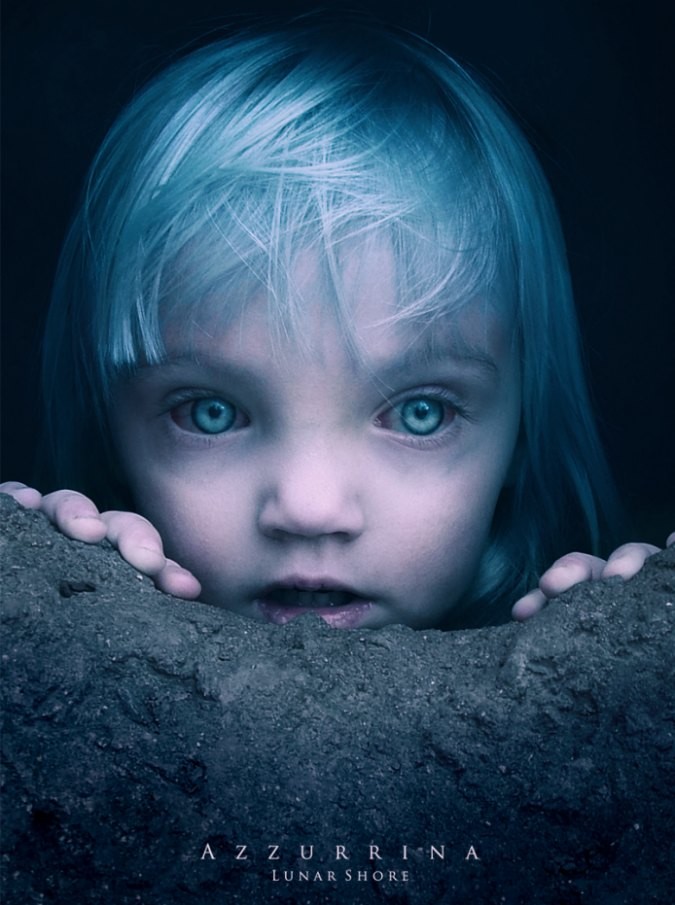 …she had eyes the colour of the sky and light hair with blue highlights…
…she had eyes the colour of the sky and light hair with blue highlights…
Azzurrina was a descendant of a very wealthy family, the Malatestas. They owned many lands and kingdoms, where marriages were arranged by the church and the state to unite noble families, increase power and also appease wars.
Legend has it that Azzurrina, the protagonist of a sad event, was an 8-year-old girl, albino and blue-eyed.
But in those medieval times, albino women were considered witches and believed to have supernatural and demonic powers, so they were not well regarded.
This story, which has been told for three centuries, is full of elements of fantasy, fascinating even today.
The legend narrates that Azzurrina was born albino, and the diversity of others is something that has always frightened human beings, sometimes leading them to believe that the best remedy is to eliminate what is different.
So, to defend (or hide?) their daughter, her parents initially dyed her hair with a dye that made it bluish.
Because of this, her father decided to keep her under the surveillance of two guards, Romenico and Ruggero, and did not let her leave the house, to protect her from prejudice and what people would say about her.
It is said that in December 1383, while her father was away at war, Azzurrina, watched over by the two guards, was playing in Montebello Castle with a small cloth ball when a heavy storm began outside.
According to legend, her ball fell down the stairs and Azzurrina went down after it. The girl’s guardians also followed her, but she fell from the top of the stairs into the castle courtyard, where there was a large pile of snow (glacier). The guards heard a horrible scream, but when they got there, they found nothing.
It is said that Azzurrina’s body was never found…
And legend has it that Azzurrina’s ghost is still in the castle and appears every five years, coinciding with the summer solstice.
To this day, many scholars go to Montebello Castle to study the supernatural phenomena that occur there. There are even recordings of a child calling “mamma”, as well as stories about objects that change places and many cases of ghosts living in this castle, in addition to the little girl’s ghost.
Some historians have researched the legend of Azzurrina further and found other answers to the facts, arriving at another narrative:
The lord of Montebello Castle was married to the daughter of the then rival Malatesta family. But he was ugly, dull, older and lame. The marriage was proposed to unite the possessions and powers of the two families.
But his young and beautiful wife always cheated on him.
She became pregnant and her husband hoped they would have a son. However, a girl was born, who was named Adelina. The thing is, Adelina was very different physically, because she was born extremely blonde and blue-eyed, which was a sign of betrayal.
Therefore, the suspicion here is that this betrayed husband, out of shame, found a way to ‘disappear’ with the girl, the fruit of his wife’s adultery.
Whether history or legend, the point is that ghosts are those who have been unduly excluded from their system of belonging!
The suggestion is that we pay close attention to our ghosts!
And when they appear, we can say:
_ Okay! I see you! You are here!
_ You exist and you have the right to exist!
_ You are an important part of my story!
And we can ask questions:
_ But who are you?
_ What do you need?
_ Who excluded you?
_ How can I include you and give you a place of honour in my story?
We can also expand this idea and see this phenomenon in a social and even global way. When we “see” (often not wanting to see) people who are socially, psychologically, culturally, financially, etc. excluded, instead of being frightened as if they were ghosts, we can see them as parts unduly excluded from our SYSTEM, from REALITY, from the WHOLE.
THE WHOLE IS GREATER THAN THE SUM OF ITS PARTS!
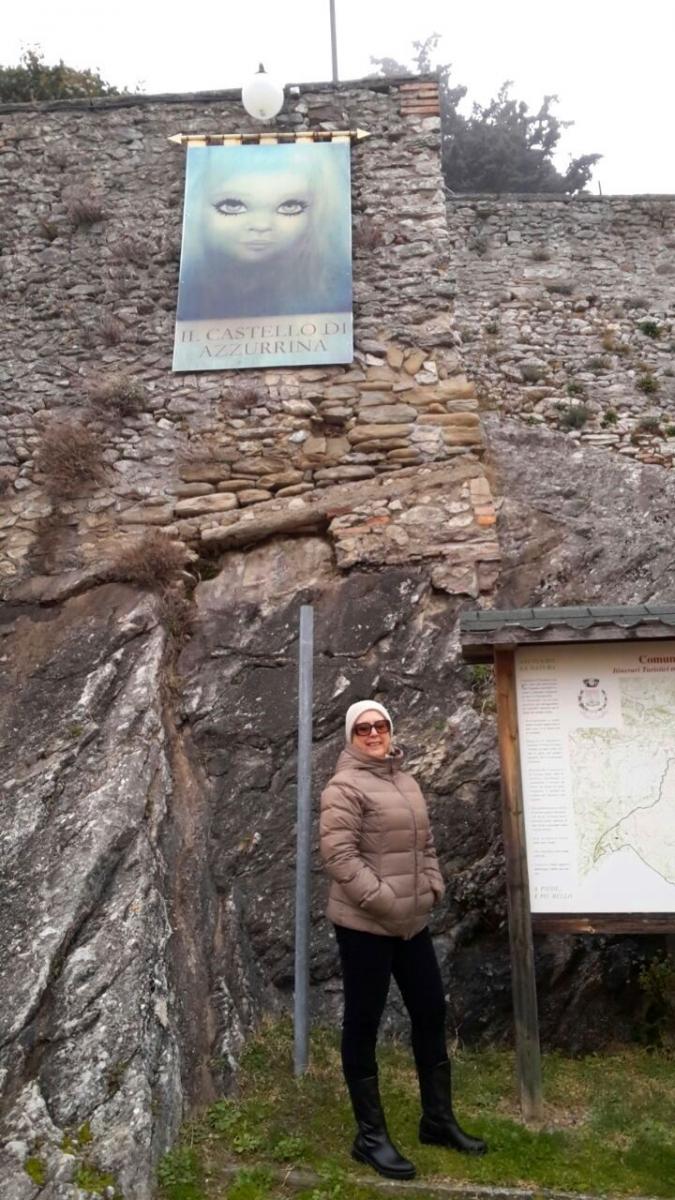 Jaqueline Cássia de Oliveira
Psicóloga CRP 04/7521
Psicoterapeuta Familiar Sistêmica (Brasil)
Formação em Psicogenealogia (Itália)
Jaqueline Cássia de Oliveira
Psicóloga CRP 04/7521
Psicoterapeuta Familiar Sistêmica (Brasil)
Formação em Psicogenealogia (Itália)